
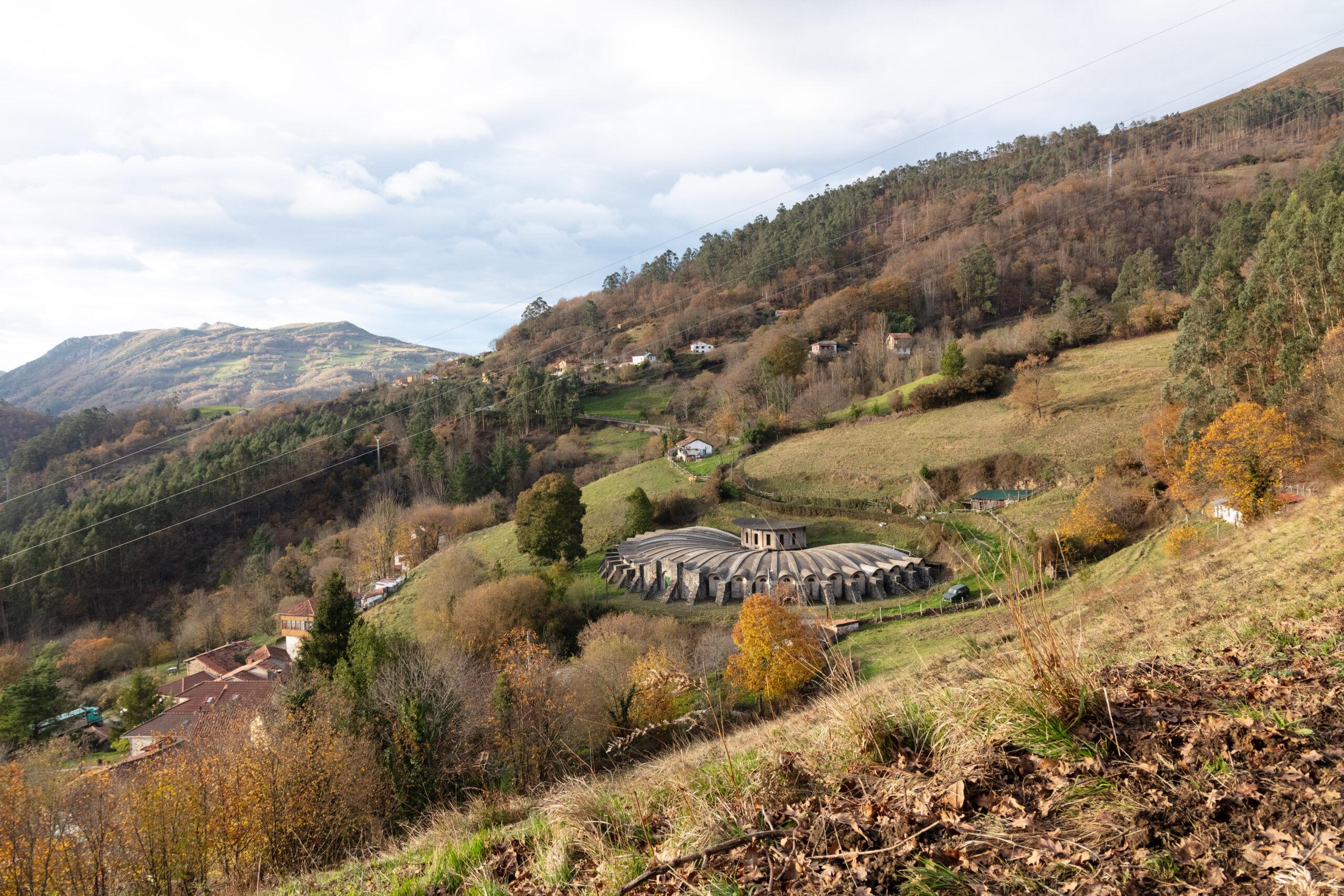
WATER RESERVOIR AT LA REBOLLÁ
The growth of mining activity transformed the Asturian basins during the first third of the 20th century. The arrival of new workers and the expansion of industrial settlements made it essential to expand water supply infrastructure. In this context, engineer Ildefonso Sánchez del Río Pisón designed the El Correor water reservoir, in La Rebollá (Mieres, Asturias), built between 1932 and 1937.
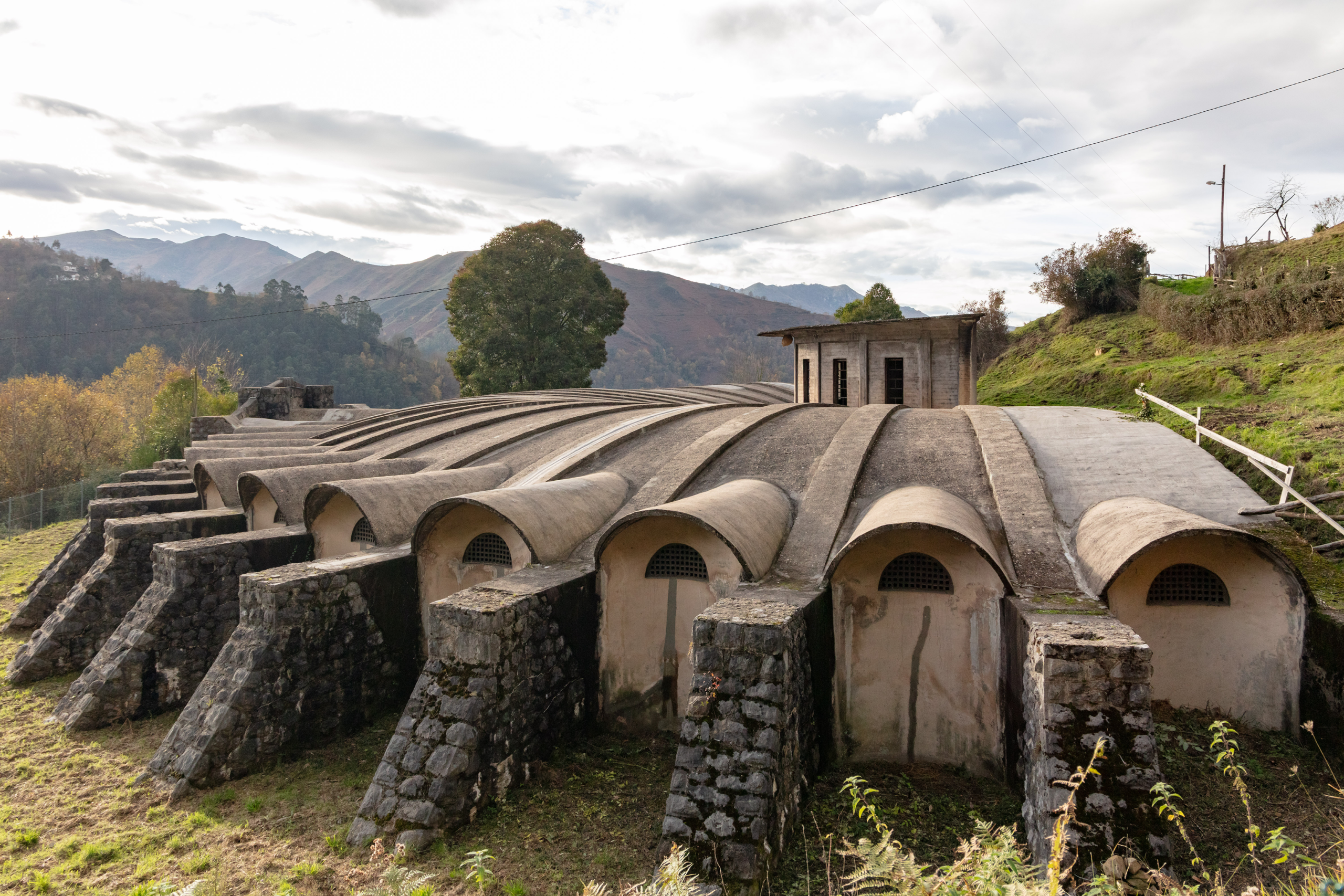
The plan is semicircular, adapting to the slope on which it sits, unlike the full circular model used at Villapendi. This layout makes use of the topography to integrate a large-capacity reservoir into the landscape. Arches spanning 28 metres rest on a ribbed reinforced concrete structure, which supports thin shells of the same material forming the roof. The perimeter body is subdivided radially around a raised central core with a polygonal plan, the valve chamber, which also acts as a resisting element against the thrust of the roof.
Sánchez del Río tested this model at the IV Oviedo Water Reservoir, during his time as municipal engineer between 1924 and 1941, and later applied it to different sites across Asturias, adapting each version to the conditions of the terrain. This conception of structure as a replicable system would shape much of his later career: in 1941 he founded the construction company Dragados y Construcciones together with Luis Sánchez-Guerra, and a year later created Río Cerámica to mass-produce his own structural patents.
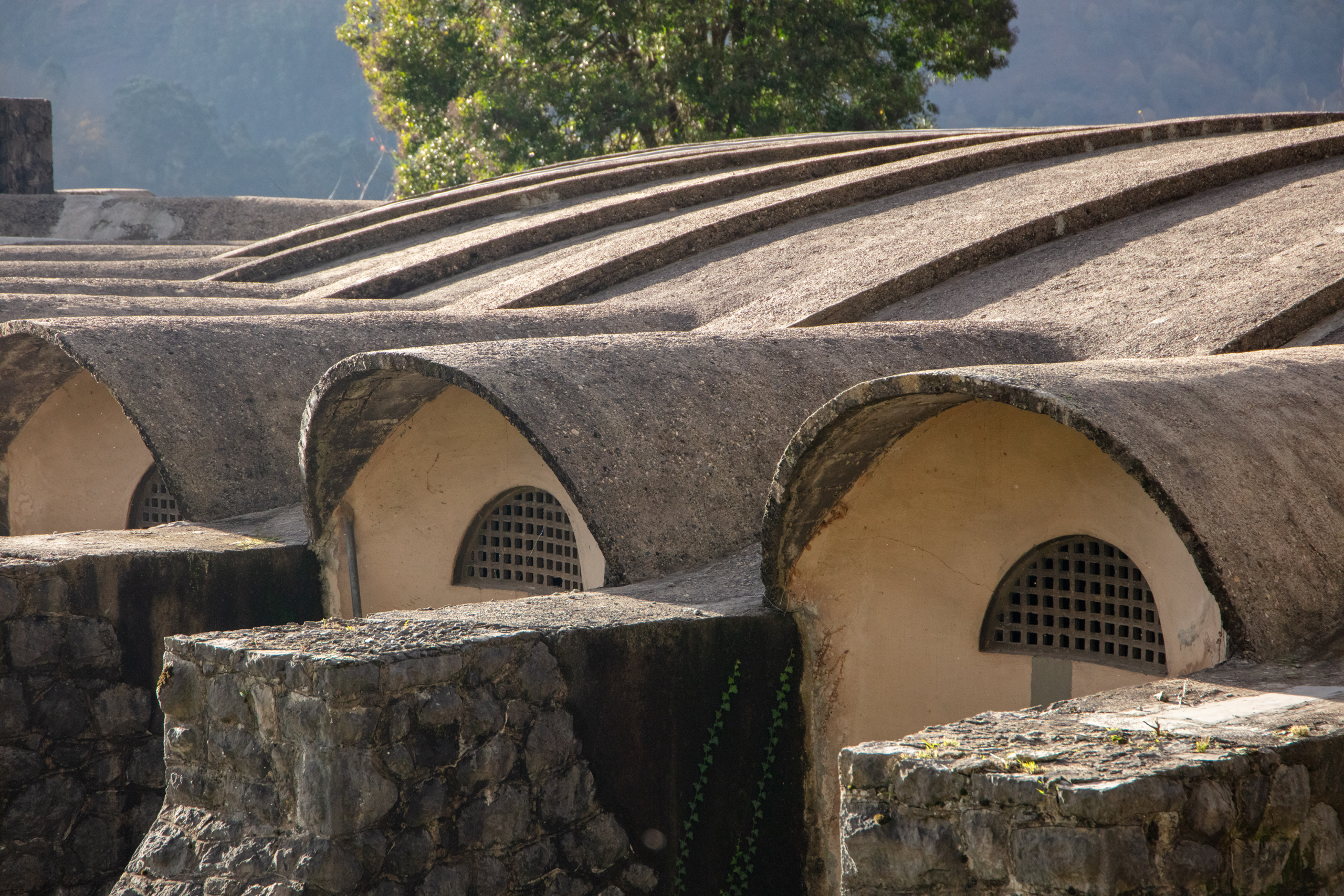
The reservoir marks a key stage in Sánchez del Río’s structural research. Here he refined a system of ribs and reinforced concrete shells capable of spanning a large-diameter volume without intermediate supports, combining material efficiency with a clearly legible geometry. At a particularly fertile moment for Spanish reinforced concrete engineering, this work reflects a distinct line of inquiry, grounded in structural optimisation and a close correspondence between form and function. That line of research, developed in Asturias through infrastructure built to meet very specific needs, would reach one of its most refined expressions three decades later in the laminar roof of the Oviedo Sports Palace.
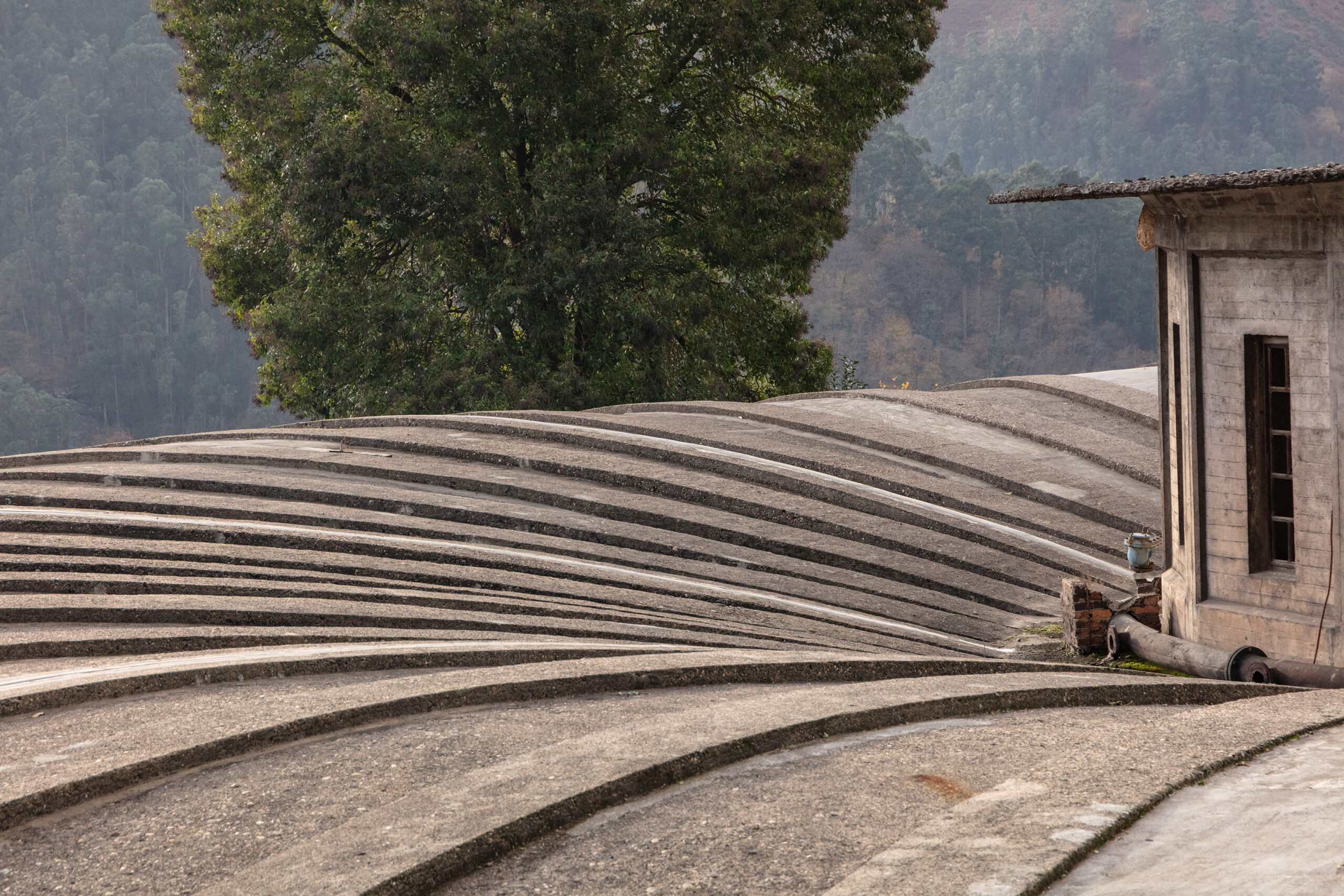
The La Rebollá reservoir is a solid piece within the infrastructure network that shaped the mining basins throughout the 20th century. Overshadowed by better-known works, it remains largely in the background, though it stands as essential evidence for understanding both the evolution of Sánchez del Río’s structural thinking and engineering’s capacity to transform territory through solutions where structure not only solves the technical problem, but also defines the architecture and its surroundings.
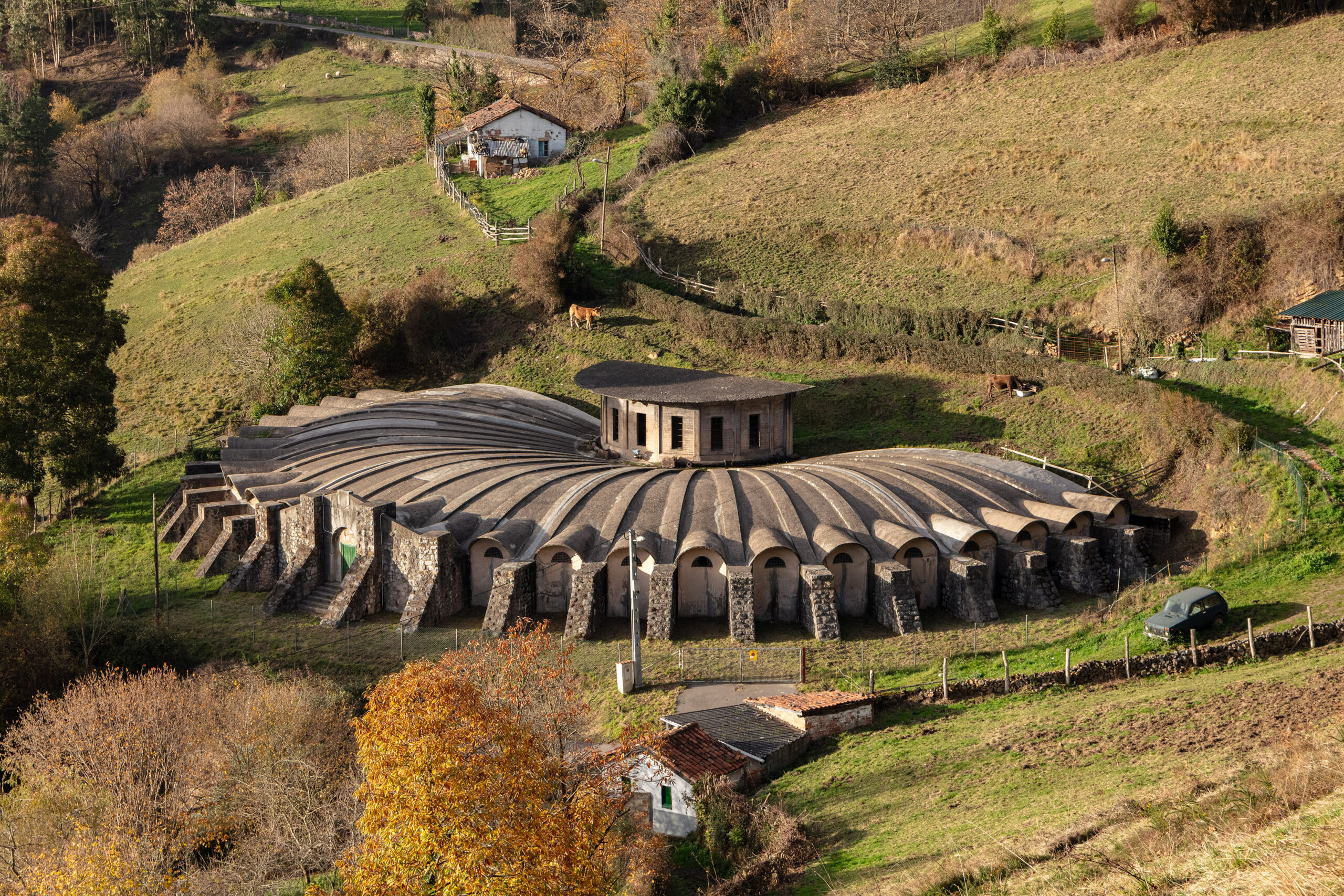
| Work | La Rebollá water reservoir (Asturias), built between 1932 and 1937 |
| Author | Ildefonso Sánchez del Río, civil engineer |
| Structure | 28-metre arches on ribbed reinforced concrete, without intermediate supports |
| Why it matters | A model designed to be repeated. Sánchez del Río first tested it in Oviedo and later applied it at various sites across Asturias. |
| Context | An urgent response to the growth of the mining basins in the early 20th century, and an early example of industrial engineering conceived as a replicable system rather than a one-off work. |
| Credits | Photography: Alina Banta. Article: Xermán Peñalver |